
Written by Darren Sinn, VP of Supply Chain and Operations for Berry Fresh
You grab a blueberry that looks perfect. Deep blue, nice and round. You pop it in your mouth and it’s so tart your whole face reacts. The next one from the same clamshell? Sweet as can be. The difference almost always comes down to timing.
See, a blueberry’s flavor is decided on the bush. Take it from us. As a company founded by blueberry growers, this is a topic our team knows, and knows well.
Consider this your ripening talk, straight from our Berry Fresh fields.
Do Blueberries Ripen After Picking? (Short Answer…No, and That’s Why We Wait)
Blueberries keep respiring after harvest and respond to ethylene, similar to fruits that ripen off the plant, but their flavor doesn’t improve once they’re picked. If respiring and ethylene aren’t common terms for you, respiring means the berry is still “breathing, slowly using up its own sugars, while ethylene is a natural gas that fruits give off to signal ripening.
That is why “picked at peak ripeness” is more than a nice marketing line on our end. Once a berry leaves a bush, the goal is to hold on to everything the plant built. That requires cold. Our berries head to cooling within about an hour of being picked and stay cold the whole way to the store. (You can see the full field to shelf process on our how we grow page.)
When Are Blueberries Ripe To Pick?
If the bush does all the work, knowing when to pick is everything. And this part surprises people: turning blue doesn’t mean a berry is done. Berries turn blue three to six days before they reach their peak sweetness and flavor, depending on the weather and the variety.
So what does ready actually look like? A berry with a reddish tinge at the stem end is still unripe, and a ripe one comes off the stem easily. Timing of the day matters, too. Berries are best picked in the morning once the dew is dried since fruit picked in the afternoon holds field heat that cuts down how long it keeps.
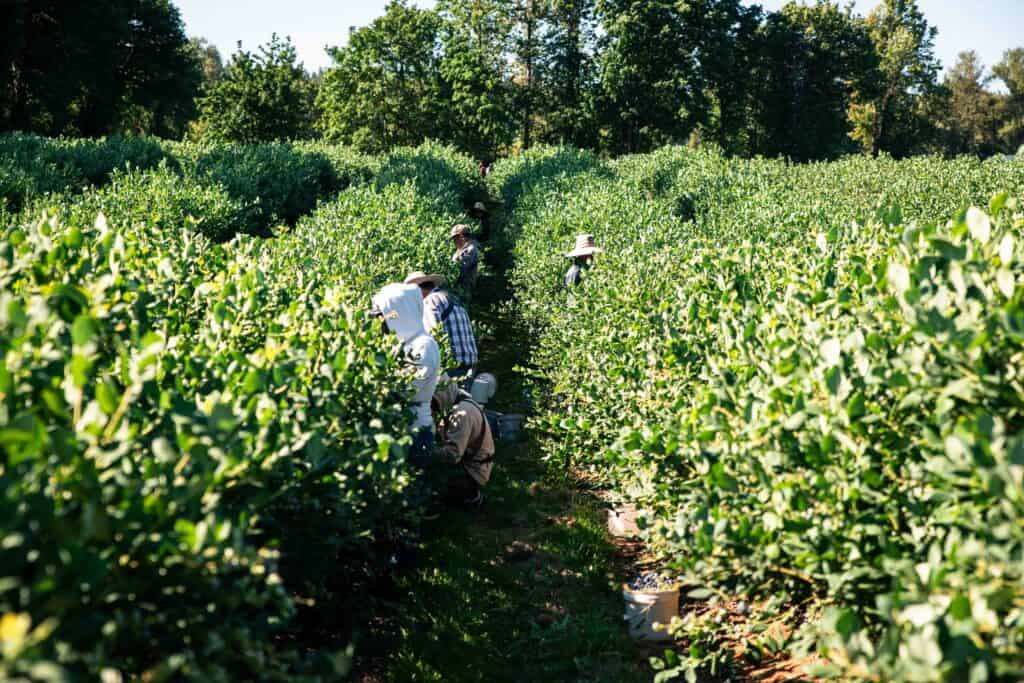
Get it wrong in either direction and you’ll taste it. Pick too early and the berries won’t be as sweet. Wait too long and they turn soft or shriveled. That’s why our blueberries are handpicked by people trained to read color, firmness, and feel, then packed straight into clamshells right there in the field.
But here’s the thing people also miss. It starts even earlier with the plant itself. Our genetics program partners with blueberry breeders who use traditional cross-pollination to develop flavor-forward varieties and like our Sekoya® blueberries. For some premium varieties, growers also check the Brix rating to measure natural sugar before picking.
How To Tell if Blueberries Are Ripe Through The Clamshell
At the store, start with color. You want a deep, even blue (or close to blue-black) and a dusty, silvery coating which is called the bloom. That bloom is natural and protects the berry, so it’s a good sign, not dust to worry about. Skip clamshells with lots of red or green near the stems.
Then check the texture through the package. Ripe berries look plump and firm, not wrinkly. Don’t be afraid to give the clamshell a gentle tilt, too. Berries should roll around freely. If they’re clumped together, stained with juice, or you spot any fuzz at the bottom, keep looking.
Our Berry Fresh blueberries are packed in clear clamshells for exactly this reason, so you can see what you’re getting before it goes in your cart. Prefer organic? Our organic berries get the same handpicked treatment.
How To Tell if Blueberries Are Ripe With Water: Sink or Swim?
You may have seen the float test online, and it actually holds up. Ripe blueberries are denser than water and sink, while unripe ones are lighter and float, which is why process-packers have long used water tanks to sort them.
Drop a handful into a bowl of cool water and see what happens. One catch: air bubbles can cling to the bloom and keep some ripe berries floating. Give the floaters a gentle push under. If they bop right back up, they’re probably on the tart side.
Floaters aren’t a lost cause, by the way. Tart berries are great in muffins, jam, or a quick sauce where a little extra sugar even things out. Just save the dunk for right before you eat since extra moisture shortens shelf life. Our guide on how to wash berries covers the rest.
When Do Blueberries Ripen? Somewhere On Our Farms, Right Now
In North America, blueberries are a summer crop. In most of the U.S., harvest begins in June for early-ripening varieties and can keep going through mid-September for later ones.
And a single bush doesn’t ripen all at once. Berries on the same plant come in at different times, so they have to be picked in several rounds over the season. Blueberries clearly don’t care about anyone’s schedule.
The short summer window is exactly why we grow in more than one place. Our Oregon blueberry farm in the Willamette Valley carries the summer stretch, where long days and cool nights help build the balance of sweetness. As the northern season winds down, harvest picks up at our Peru blueberry farm and with our growers in Chile. Mexico and Morocco help fill in the rest of the calendar. It’s fair to say that blueberry season at Berry Fresh is every season.
Ready for a pint that tastes the way a blueberry should? Find Berry Fresh blueberries at a store near you.
About the Author
Darren Sinn is Vice President of Operations at Berry Fresh, where he has also served as Senior Business Manager. Darren has been a key voice on the company’s Pacific Northwest growing operations, including its Sweet Karoline® blackberry and blueberry programs in Oregon. He has represented Berry Fresh at major industry events such as the IFPA Global Produce & Floral Show and has spoken publicly about the company’s seasonal production strategy across Oregon and Mexico. Darren is a graduate of Oregon State University.